Banksy didn't do this one - 'AI Hiding in Denial'
Layla Foord
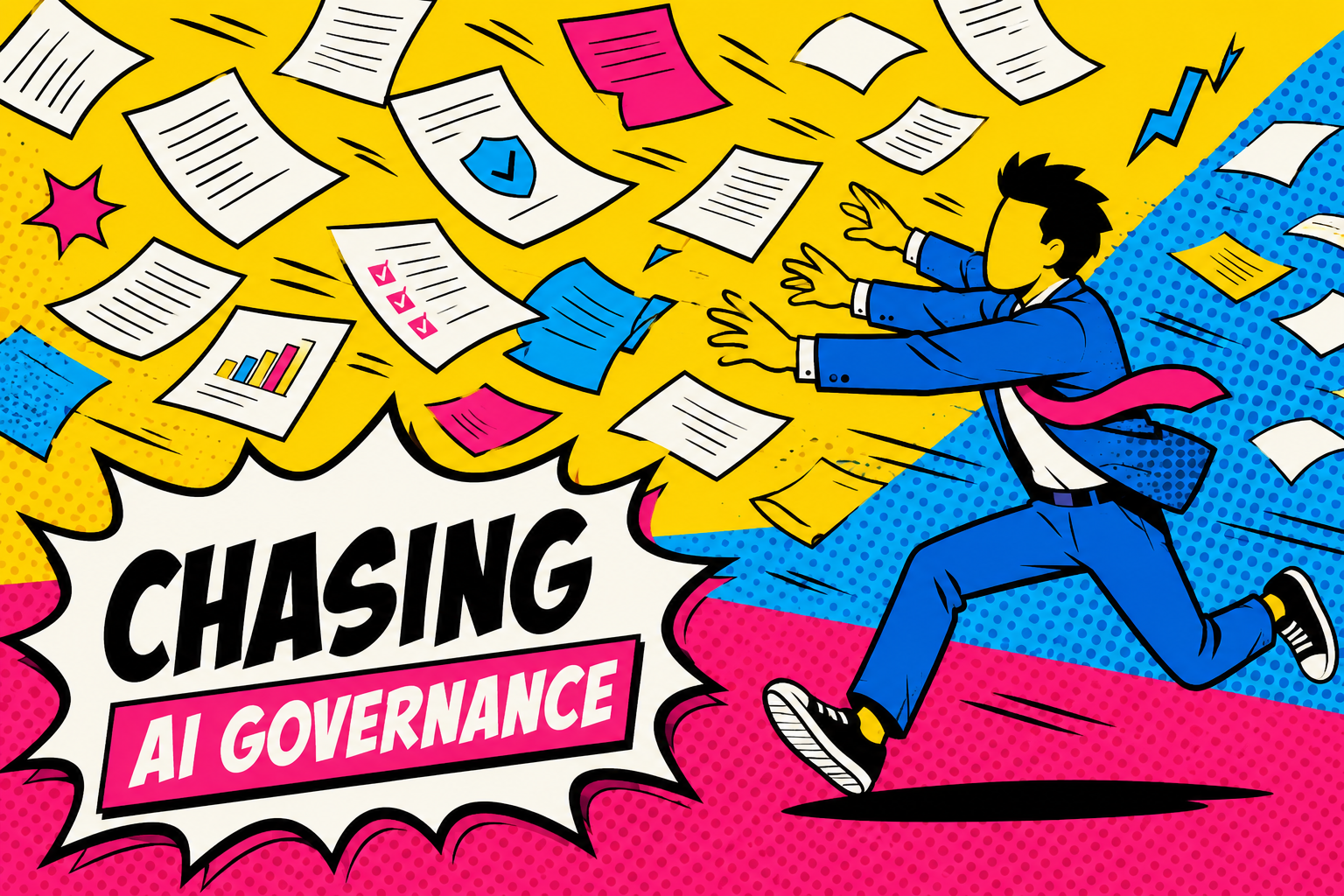
Article about the differences in AI rules that can lead to swapped bodies and copyright infringements
I made this image using Google's Gemini and its "NanoBanana" assistant. I'd just noticed that AI is sitting right there inside the word Denial, hiding in plain sight, and I thought it would be interesting to visualise.
Then I tried to generate it in ChatGPT. It wouldn't let me. Over and over, it tripped guardrails I hadn't expected. Gemini didn't hesitate for a second.
That contrast stopped me, not because I was worried about Banksy being annoyed I'd used his style to bring an idea to life, but because it revealed something much bigger underneath. If one system refuses a harmless idea for safety reasons and another allows it without a blink, what else is slipping through the gaps?
A more concerning example: Gemini will let you upload a photo of a real person and place them into entirely different situations, clothes, or bodies, seamlessly, no friction, no ethical prompt, no "are you sure?" As a mother, and as someone working in tech, education, and mental fitness, that unsettled me far more than the graffiti ever could.
It reminded me of a recent conversation where Bernie Sanders asked an AI researcher a blunt question: if AI is transforming everything, who is actually steering it, and are they thinking about whether you and I get a better life out of it? The honest answer was uncertain.
I'm not anti-AI. I work with it every day, I build with it, I teach with it. The potential upside is enormous: medicine, learning, creativity, accessibility, new ways of expressing what it means to be human. But the safety gap between platforms is widening fast, and the people most at risk are the ones who won't see the difference: children, young people, anyone who assumes all AI tools behave the same way.
This small graffiti experiment made something click for me. I can't unsee it now.
How do we influence the safeguards of the tools that are already shaping our world? If you or your kids are using AI, how do you choose the systems that are actually designed to keep them safe?
If you're involved in this space, I'd genuinely like to talk. Because this isn't theoretical anymore. It's already here.
The Pattern
New essays when there's something worth saying
Not on a schedule. Subscribe and get the next one when it's ready.