The Third Wave of Technological Evolution: Generative AI
Layla Foord
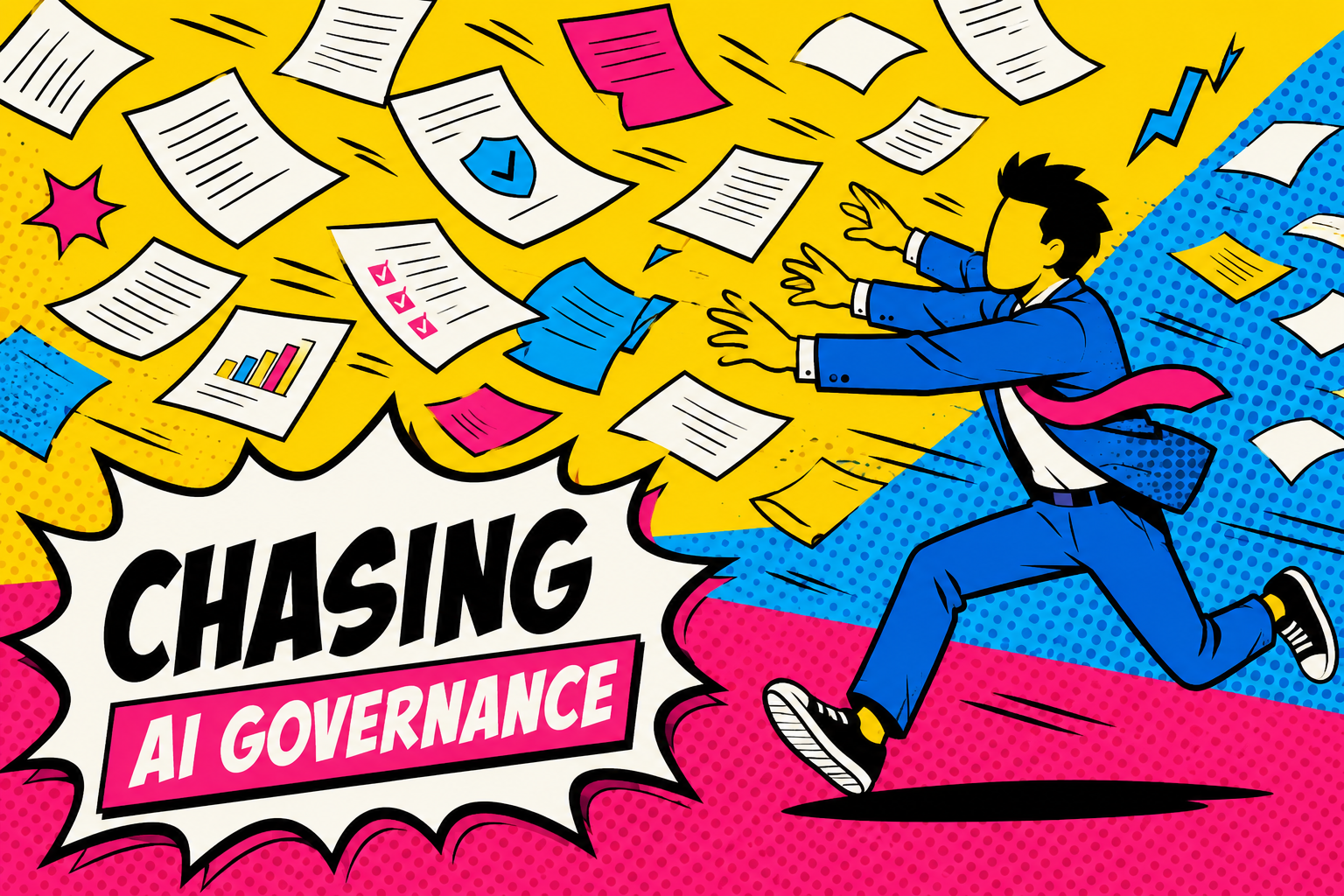
Something big is happening. Fast Adoption You can feel it. So can everyone else. LinkedIn is a freakin' nightmare of AI, EM's and bogus claims. But here’s the strange part: very few people can explain it clearly. Most are caught between fascination and fatigue. Between wild optimism and quiet fear. That’s not because people are behind. It’s because this change is happening faster than our language for it . Let’s slow it down. Let’s walk through it - carefully, clearly, and with the respect it...
LinkedIn is a nightmare of AI noise
LinkedIn is a freakin’ nightmare of AI, EMs, and bogus claims.
But here’s the strange part:
Very few people can explain what’s actually happening.
Why it feels unclear
Most people are caught between:
- fascination and fatigue
- wild optimism and quiet fear
That’s not because people are behind.
It’s because this change is happening faster than our language for it.
Let’s walk through it.
Carefully.
Clearly.
With the respect it deserves.
We’ve seen this before
This is not the first time something invisible reshaped the visible world.
We’ve been here before.
Just slower.
Electricity
It took electricity nearly 50 years to reach most homes.
People lit candles while engineers ran wires.
What seemed impossible became a switch you flick.
The Internet
It took about a decade to reach mass adoption.
At first:
- slow
- noisy
- full of sceptics
Now it underpins almost everything.
Platforms
It took Facebook ten months to reach a million users.
What’s changed
The shape hasn’t changed.
Only the speed.
What speed does
Speed compresses everything:
- learning
- discomfort
- our ability to pause
The familiar resistance
We’ve said all of this before:
- “No one will read the news on a computer.”
- “You can’t trust shopping online.”
- “Why would anyone want a phone without buttons?”
- “Streaming is too unreliable. DVDs will always be better.”
And now:
We tap.
We swipe.
We listen.
We subscribe.
The pattern of progress
This is the pattern:
We don’t adopt change.
We absorb it.
Until it disappears into expectation.
What this actually is
It’s not a robot replacing humans.
It’s something else.
A new construct.
What a construct does
In science, a construct is a conceptual framework that reshapes how we think and act.
- language is a construct
- money is a construct
- maps are constructs
Once introduced, they don’t just change what we do.
They change how we imagine doing it.
What AI is becoming
It’s becoming a new way of expressing thought.
A system that lets us:
- draft complex ideas at the speed of thought
- translate knowledge across languages and levels
- turn a sketch into code, or an emotion into a song
- prototype, plan, explain, simplify, dream
It’s not perfect.
But neither were calculators, word processors, or GPS.
What it shifts
AI isn’t replacing intelligence.
It’s redistributing capability.
And that raises real questions.
Who’s actually using it
The people using AI well right now are a small fraction.
Maybe 5%.
Likely less.
They’re often:
- resourced
- tech-literate
- time-rich
- or deeply curious
Everyone else
Everyone else is not behind.
They are overloaded.
They are:
- running schools, families, clinics, stores
- working shifts
- paying bills
- getting by
What inclusion requires
They deserve to be included in this wave.
Not once it’s profitable.
While it’s still shaping.
What leadership requires
This moment requires leadership that doesn’t speak in riddles.
If you’ve seen this before
If you’ve lived through the rise of the Internet…
If you remember typing on glass for the first time…
If you’ve felt the shift from doubt to dependence…
Then you already know the rhythm.
You don’t have to chase hype.
You know how to look for fit.
The role now
Your role isn’t just to adapt.
It’s to help name what’s happening.
So others can join with less fear.
Where to start
You don’t need to build anything today.
Stay in the room with the questions:
- What could this help me express?
- What’s always been stuck that might now be set free?
- What am I scared to lose?
- What am I ready to release?
If you’re leading
If you’re in a position of influence, in a team, a business, a board, a school:
You are being asked to lead without certainty.
With pattern fluency.
What that looks like
- Don’t let hype decide your roadmap
- Notice what you’re clinging to that no longer serves
- Prototype to learn, not to prove
- Examine the stories you’re telling about the future
- Notice who’s missing from them
What’s true
This wave is not waiting for consensus.
But it will move differently if guided with care.
The real call
This isn’t a call to master tools.
It’s a call to remember:
We shape the constructs we participate in.
What matters
What we build now
and who we build it with
will matter for decades.
The Pattern
New essays when there's something worth saying
Not on a schedule. Subscribe and get the next one when it's ready.