KLCon and Tech Fest - Lessons in connection
Layla Foord
A reflection on SEEK Tech Fest, KL Con and the quiet work of bringing distributed teams together, where labels, food, rituals and shared rooms became part of the real organisational system.
I remember being annoyed about the labels.
Not dramatically annoyed. Not enough to make a proper complaint or anything like that. Just that low-level irritation you get when someone gives you a job that sounds operational, fiddly, slightly beneath the level you thought you were operating at, and then tells you it will be good for you.
Chris had asked me to run SEEK Tech Fest.
It was his idea, really. He was one of those leaders who could see the shape of something before other people could, not in a showy visionary way, although he could certainly be inspiring, but in a way that made you realise later he had been designing the conditions for something to happen. Not just the thing itself. The conditions around the thing.
At the time, though, I mostly remember thinking, why me?
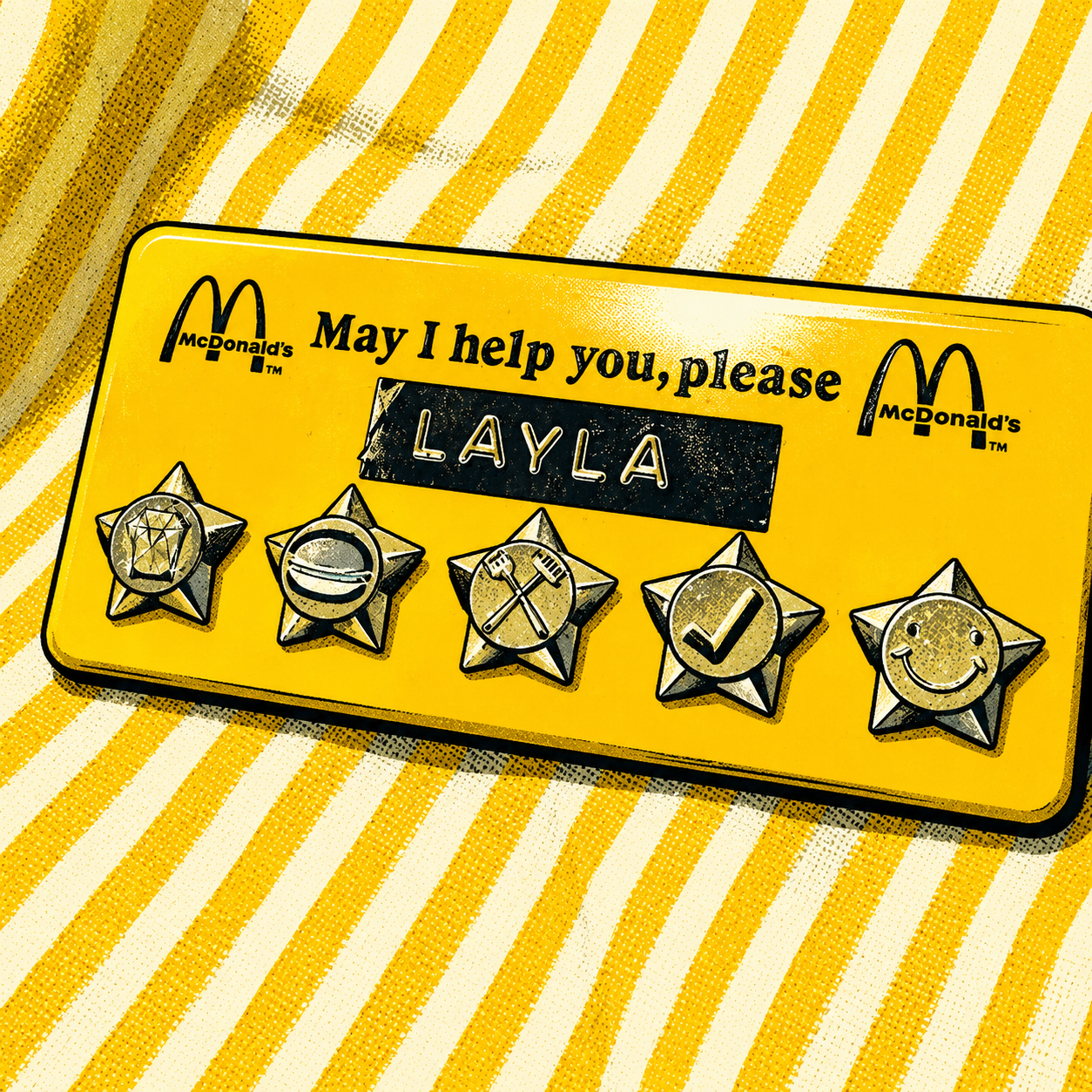
There was so much admin in it. Venues, schedules, food, speakers, travel, slides, lanyards, rooms, timings, who needed a visa, who had dietary requirements, who was arriving when, who needed to speak to whom, and yes, the labels. Always the labels. Names had to be printed and checked and matched and placed somewhere and then someone's title would be wrong, or their team would have changed, or someone would arrive who had not been on the list and suddenly the whole system would feel more fragile than it should have.
I think I said something like, why would I be the one to do this?
And Chris said, because it will be a good way to meet everyone.
Which was annoying, because he was right.
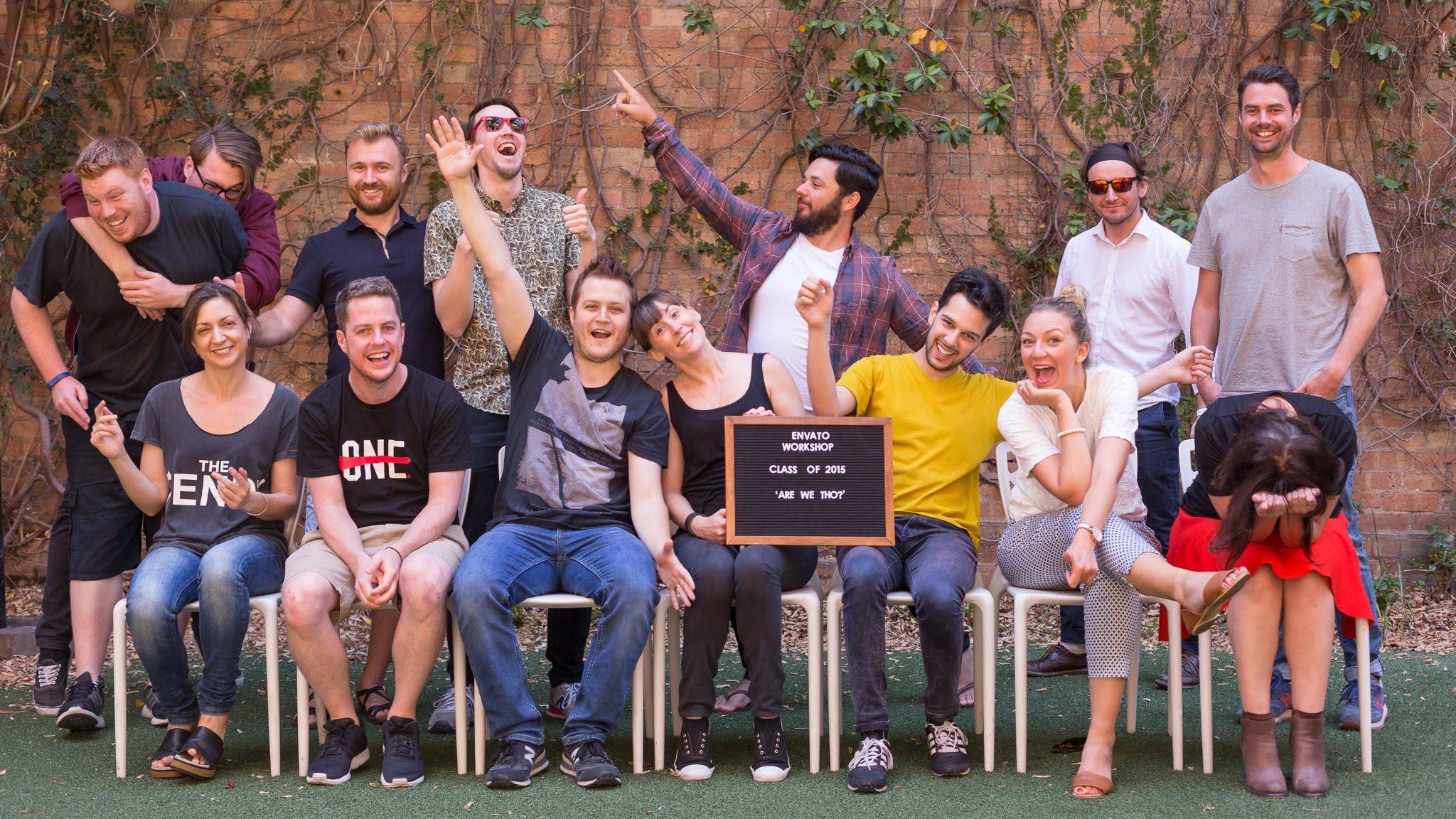
The first one was in Melbourne. We brought people together from Mexico, Brasil, Kuala Lumpur and the Melbourne team, all into one place, for a curated couple of days of talks, workshops, shared meals, games, external speakers and the slightly chaotic intimacy of people who normally exist in Slack channels and video calls suddenly standing beside each other trying to find coffee.
There is something that happens when a distributed team becomes physical.
It is not just that people can hear each other better, although that helps. It is not just that the time zones disappear for a moment, although that helps too. It is that people become harder to flatten. The person who has been a name on a delivery thread becomes someone who laughs at the wrong part of a joke, or asks a precise question after a talk, or has a story about their family, or is quietly brilliant in a workshop once the louder people have stopped filling the room.
You start to understand the system differently when the system has faces.
I loved it, once we were in it.
I loved seeing people from different markets talk about what they were building and what was hard and what they knew that the rest of us did not. I loved the external experts coming in and shifting the room slightly. I loved the hands-on workshops because people had to stop performing alignment and actually make sense of something together. I loved the games, even when they were silly. Maybe especially then, because silliness tells you things about a team that a strategy session never will.
But I still remember the labels.
I remember the physical labour of getting everyone into the room. The unglamorous work around the meaningful work. The part no one notices when it goes well, and everyone notices when it doesn't. The spreadsheets behind the warmth. The catering behind the culture. The tiny administrative acts that make it possible for people to arrive somewhere and feel expected.
At the time I think I saw that as event management.
Now I think it was organisational design.
Not the formal kind, with reporting lines and boxes and capability models. The other kind. The kind where you create a temporary system and ask people to experience the organisation differently inside it. For two days, the normal hierarchy softens. The edges between countries blur a bit. Someone junior can teach something. Someone senior can look slightly ridiculous in a game. Someone from another office can explain a problem you thought was simple until you hear the local version of it. People eat together and suddenly a future disagreement has more softness in it because there is a memory attached to the person on the other side.
That matters.
The next one I helped with was in KL, and by then I had learned enough to know that it should not be led by Melbourne.
That was the point, really.
If the goal was connection, then the centre could not always be here. The team in Kuala Lumpur needed to shape it. Not just host it, but lead it. Bring their own humour, their own rhythm, their own rituals, their own way of making the event feel alive.
And they did.
Two people from the team stood up as comedic MCs and carried the room in a way I could never have designed for from another country. Someone else led the games. We spent two days thinking about how we would work together for the coming year, but not in that dry planning way where everyone sits under fluorescent lights pretending the plan is the work. We were actually together. In the room. Laughing, eating, arguing lightly, making sense of what needed to change because we could feel the distance between us for once, rather than just abstractly know it existed.
We ate amazing food.
We sang karaoke.
The merch still stands up, which is not always true of conference merch. There are some t-shirts that should have been allowed to quietly disappear, but those ones still feel good to me. KL Con. Tech and Product Fest. The kind of thing that could have been throwaway, but somehow became a marker of a time when people were trying to build something across distance and culture and timezone and the general weirdness of global product work.
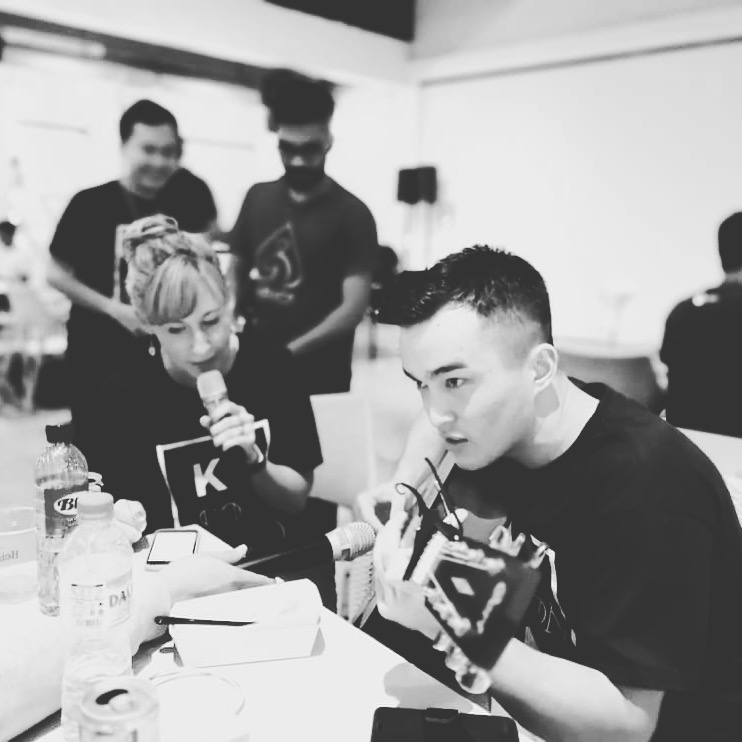
The best bit, though, was probably singing with Luke while he strummed guitar.
I know his dad, which made it feel even more layered somehow. Not in a big sentimental way, just that strange folding of worlds that happens sometimes in work, where someone is not only a colleague, but someone's child, someone's friend, someone with a whole history sitting just behind the role they currently hold. We sang together, and for a moment it was not about delivery or structure or platform work or market complexity or anything that would fit neatly into a quarterly planning document.
It was just people in a room, making noise together.
I think work needs more of that than we admit.
Not forced fun. Not corporate bonding. Not the slightly desperate version where someone has read a culture deck and decided everyone needs an icebreaker.
Real connection.
The kind that happens because people have been given enough time, enough food, enough informality, enough shared difficulty and enough permission to become more than their job title for a while.
We had other rituals in KL too.
When we visited, we would put our hands on the wall with paint. There are photos of people pressing their palms against the wall, adding colour beside the other handprints already there. It is such a simple thing, almost childlike, and maybe that is why it worked. You arrive, you contribute something visible, you leave a mark. Not a strategic mark. Not a performance mark. Just proof that you were there.
On Fridays, there were shared learning sessions.
Again, simple. But simple things repeated with care become culture. Someone teaches. Someone listens. Someone tries something. The organisation slowly learns that knowledge is not only held by leaders or experts or the people with the loudest confidence. It is distributed. It is everywhere. It just needs somewhere to go.
I have thought about those conferences many times since.
Especially now, when so much work has become technically connected and emotionally thin. We have better tools than we have ever had. Faster channels. Cleaner documents. Shared drives. AI notes. Recordings. Dashboards. Threads. Calendars that can find the least impossible time for five countries to meet.
And still, something goes missing when people never sit beside each other.
Not always. Not for everything. I am not romantic about offices for the sake of offices. A lot of in-person work is wasteful, noisy and badly designed. Plenty of meetings do not become more useful just because everyone had to commute to have them.
But some forms of work need the body in the room.
They need the pause before someone speaks. The look across the table. The joke that would never survive being typed. The quiet person who says something at dinner that changes how you understand them. The moment you realise someone who seemed difficult on Slack is actually exhausted, or funny, or carrying more than you knew. The informal conversation after the formal one, where the real thing finally gets said.
Those moments become part of the organisation's memory.
They make later work easier in ways that are hard to measure and very easy to dismiss. It is not that everyone magically agrees afterwards. They don't. Sometimes they disagree more honestly. But the disagreement sits on top of relationship, not assumption.
That is different.
Those relationships still exist.
There is still a Slack alumni group. People from that time are still connected, still finding each other, still working together in different configurations. Many are now helping power Chris' new start-up, which makes sense to me. Not because he gathered a network in some transactional way, but because people remember what it felt like to be led by someone who believed in bringing people together properly.
I carried that lesson with me.
Through other jobs, other teams, other rooms, other attempts to make work feel less fragmented than it naturally becomes. I have not always got it right. No one does. What I learned from Chris, and then carried into KL Con and later roles in my own way, was that the work around connection is not separate from the work itself, even when it looks like admin from the outside. They are the system. Their trust, their memory, their willingness to help, their sense of being seen, their stories, their private griefs, their weird talents, their karaoke songs, their questions, their handprints on the wall.
All of it counts.
Titles matter in some contexts. They tell you something about responsibility and decision rights and the shape of the work.
But they do not tell you who someone is.
The real work, or at least the work I keep finding my way back to, is making enough space to learn that part too.
Because the people you meet, work for, work with, and have the privilege of leading, they stay with you.
If you are paying attention, they change how you lead.
And if you are lucky, years later, you still get to hear their stories.
The Pattern
New essays when there's something worth saying
Not on a schedule. Subscribe and get the next one when it's ready.